Centro Universitário da Região da Campanha (Urcamp)
WHO AM I, OR WHO WILL I BE, OUTSIDE OF CARE?
The challenges of social reintegration for institutionalized adolescent girls
By: Amanda Colares, Ana Carolina, Cecília Katler, Maria Pia, Vitória Mór, and Yasmim Severo
Bagé, RS — 2026
Social reintegration and identity formation in adolescents under protective institutional care.
Use of games such as "Emotions Freeze", "Who Am I", and an interactive board created for the city of Bagé.
Active-listening interventions at a local care institution, aimed at preparing residents for the transition to independence.
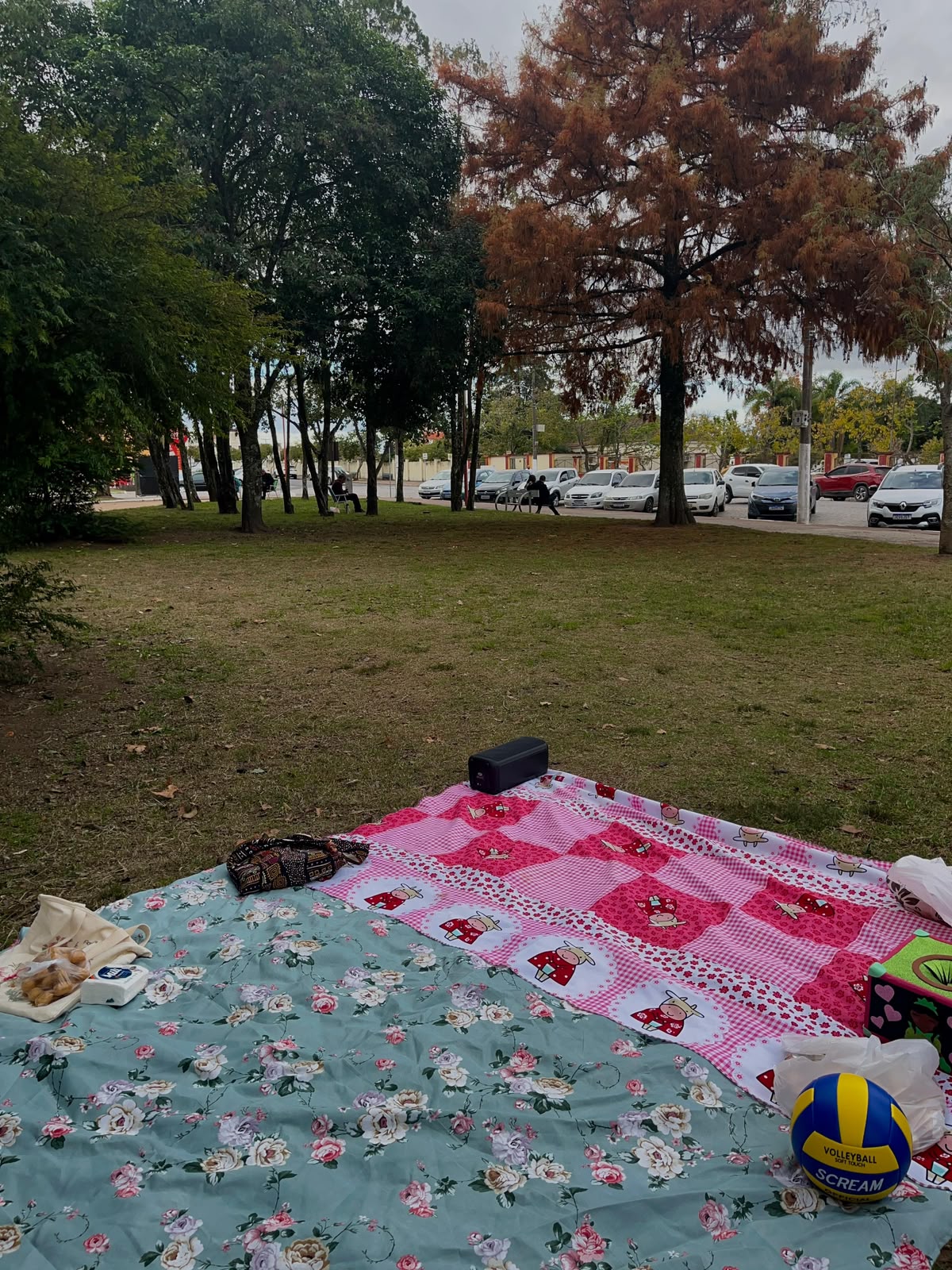
Outdoor picnic in a Bagé public square for the extension project activities.
Set up an outdoor gathering space in Bagé for the Extension Project activities, creating a welcoming environment.
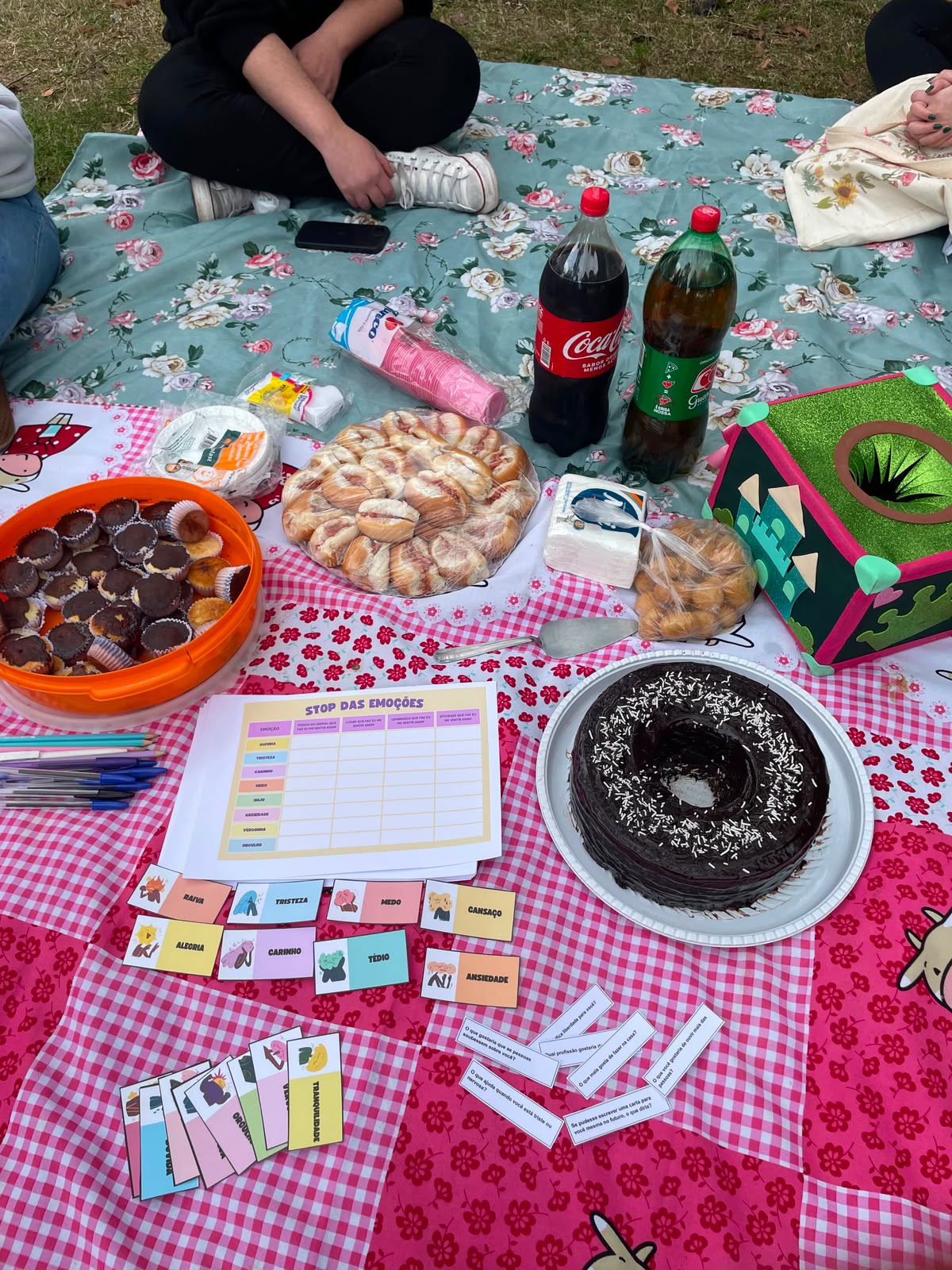
"Emotions Freeze" activity and shared snack during the extension project.
A welcoming moment with a shared snack, paired with the "Emotions Freeze" dynamic and colored cards for exploring feelings and emotions.
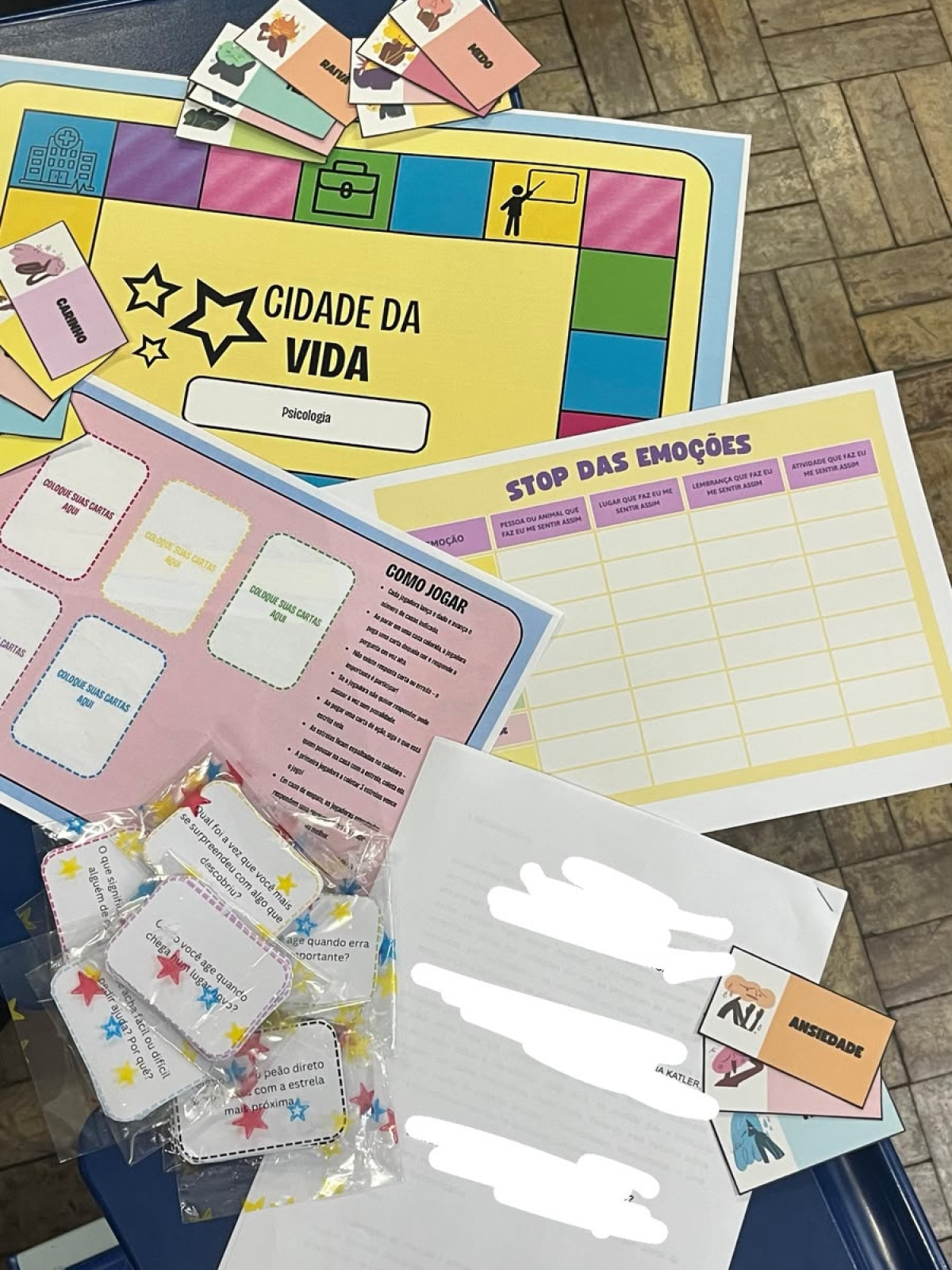
Board of the "City of Life" educational game used in psychology activities.
The interactive "City of Life" board game, created to simulate choices and paths toward autonomy, part of the Extension Project activities.

"You Are So Much More" keepsakes
Handmade keepsakes crafted to strengthen the girls’ self-esteem with encouraging, supportive messages.

"Where to Study in Bagé" informational material.
An educational guide detailing study opportunities, technical courses, and scholarships at institutions in Bagé.
01 / Introduction and Context
Casa da Menina is an institution focused on the care of children and adolescents in situations of vulnerability or violence. Childhood and adolescence are stages marked by profound social, physical, and emotional change, and actions that put this population at risk can cause harm that carries into adulthood and becomes embedded in how they relate to others. For these girls, this process unfolds in a particularly complex way, shaped by life circumstances marked by experiences of abandonment or violence that leave them carrying insecurity and difficulty adapting (Santos; Peixoto, 2023).
In this context, it is essential to understand how these experiences negatively affect the development of the girls in care. According to Bowlby (1989), the absence or fragility of secure emotional bonds can compromise emotional development, affecting self-esteem, trust, and the capacity to form new relationships. This makes it necessary to raise awareness of how important this topic is, given the fundamental role the institution plays at this stage. This work therefore seeks to contribute to effective, humanized practices aimed at these girls’ safe reintegration into contemporary society.
1.1 Topic: Who am I, or who will I be, outside of care? The challenges of social reintegration for institutionalized adolescent girls.
1.2 / Problem
Research Problem
In what ways do social inequality, lack of opportunity, and experiences of exclusion shape how institutionalized children and adolescents in situations of social vulnerability perceive themselves in society — reflected in insecurity, low self-esteem, and difficulty with self-expression — especially in the face of the challenges of social reintegration outside of institutional care?
02 / Rationale
Carrying out this project is essential to improving interpersonal interaction, body expression, and communication for all the young women at the care institution. It is also essential to raise awareness among people living in contexts of social vulnerability, enabling stronger self-esteem, autonomy, and a sense of belonging. The project also contributes to building healthy bonds, emotional development, and broader social skills, supporting inclusion and active participation in society.
It is worth noting that this project seeks not only to offer a space for listening and welcome, but also to promote meaningful change in the participants’ lives, encouraging agency, mutual respect, and the appreciation of their identities and potential.
03 / Project Objectives
3.1 General objective: To understand how institutionalized young people perceive their reintegration into society and express their feelings, expectations, and experiences on this subject.
- 1.Observe the perceptions and feelings of young women who have left the institution.
- 2.Analyze how adolescents at Casa da Menina interpersonally understand their social reintegration and outlook for the future.
- 3.Identify participants’ feelings and expectations about life outside institutional care.
- 4.Use a board game as a playful tool for expression and support.
- 5.Understand how each girl expects to face her experiences after leaving institutional care.
- 6.Identify the emotional challenges girls face after leaving institutional care.
04 / Theoretical Framework
Institutional care policy in Brazil is grounded in the Child and Adolescent Statute (ECA), which establishes institutional care as a provisional, exceptional protective measure, guaranteeing the right to family and community life. Recent studies show, however, that despite its protective nature, institutional care can affect the psychosocial development of children and adolescents, particularly regarding the formation of emotional bonds, the development of autonomy, and a sense of social belonging. Institutional life, while essential in situations of vulnerability and rights violations, can significantly shape interpersonal relationships and reintegration processes, making emotional and social support during care — and during the transition to adulthood — even more relevant (Assis; Farias, 2013; Cassarino-Perez; Montserrat; Sarriera, 2020).
Adolescence is a central period for identity formation and life planning. Under Erikson’s (1976) psychosocial theory, this is the stage of identity consolidation, in which experimenting with social roles is essential. Although a classic author, his theory remains widely used. More recent research adds that adolescents in institutional care face additional challenges in this process, such as histories of neglect, family rupture, and social stigma — factors that can compromise their outlook for the future (Dell'Aglio; Hutz, 2004; Gulassa, 2021).
In the field of Social Psychology, understanding these adolescents’ perceptions can be deepened through the concept of social representations proposed by Moscovici (2003). While a classic theoretical foundation, contemporary studies have drawn on it to understand how young people in vulnerable contexts construct meaning about themselves, society, and the future (Jodelet, 2018; Sá, 2020).
The transition to adulthood, particularly institutional discharge at age 18, is identified as one of the most critical moments for adolescents in care. Recent research shows this process often unfolds without adequate support, generating insecurity, difficulty with social reintegration, and a risk of socioeconomic vulnerability (Paula; Dell'Aglio, 2020; Fernandes et al., 2022). The absence of effective public policy for post-care follow-up worsens this picture.
A relationship with school also plays a key role in these adolescents’ development. Vygotsky’s (1991) sociocultural perspective, though classic, underscores the importance of social interaction in the learning process. Current studies reinforce that school can act as a protective factor, but can also reproduce exclusion, especially when it fails to account for the specific circumstances of students in institutional care (Souza; Brito, 2015; Martins; Oliveira; Marchão, 2023).
Entry into the job market and first work experiences are also significant challenges. Young people leaving care institutions frequently face difficulties related to low professional qualification, restricted access to opportunity, and fragile support networks (Silva, 2022). These factors directly shape the autonomy and life plans of these individuals.
Given this context, the importance of spaces for qualified listening and psychosocial intervention becomes clear — spaces that strengthen autonomy, self-esteem, and the ability to build future plans. This extension project seeks to understand how girls in institutional care perceive their reintegration into society, their expectations for the future, and the challenges they face in the transition to adulthood, contributing to more sensitive, context-aware practice in the field of Psychology.
05 / Methodology and Practical Approach
This study takes a qualitative, exploratory, and descriptive approach, aiming to understand how children and adolescents in institutional care perceive themselves, their experiences, and the social context they are part of. The qualitative approach was chosen because it allows for understanding the experiences, feelings, and meanings the participants themselves attribute to their life context.
The research was carried out at Casa da Menina, an institution located in the municipality of Bagé, Rio Grande do Sul. Participants were female children and adolescents up to age 17 in care at the institution, taking part on a voluntary basis. The number of participants was not predefined and varied according to availability and turnout at each intervention, respecting the ethical principles of research with human subjects.
Data collection took place through a socio-educational intervention based on direct interaction with participants. It began with a moment of welcome and integration, using a light-touch activity meant to build rapport and create a safe, welcoming, trustworthy environment.
The "Who Am I of Feelings" activity, built around illustrated cards depicting different emotions, in which participants used questions to identify the feeling shown — supporting communication, interaction, and emotional recognition, while strengthening bonds among the group.
The "Emotions Freeze" dynamic, in which participants reflected on feelings such as fear, anger, anxiety, happiness, and affection, among others, answering questions about the situations that triggered these emotions in their daily lives. We also used an interactive board game, developed by the group, symbolically representing a city. In it, participants moved along different paths simulating everyday situations, involving challenges, choices, and reflection on their experiences and their future.
Distribution of informational flyers about study opportunities available to the girls in care. This was paired with an explanatory conversation walking through each option in detail, helping participants broaden their understanding of educational paths and reflect on their life plans.
Throughout the project, open-ended questions were posed about participants’ experiences, feelings, social relationships, self-perception, and their sense of place in society. Their responses and interactions were recorded for later analysis, allowing us to understand their forms of expression, communication, and perception of their own trajectories.
Data was recorded through field-diary notes, drawing on participant observation during the activities. Data analysis relied on content analysis, seeking to identify recurring patterns, meanings, and perceptions in the participants’ accounts.
Ethical research standards were followed throughout, guaranteeing participants’ anonymity, confidentiality of information, the right to decline or withdraw participation at any time, and attention to their emotional wellbeing throughout the intervention.
06 / Execution Timeline
| Period | Activity |
|---|---|
| March | 03/05 – Topic definition; 03/12 – Literature review; 03/19 – Reference research; 03/26 – Drafting the introduction. |
| April | 04/01 – Developing the theoretical framework; 04/08 – Structuring; 04/15 – Research on the board game; 04/22 – Research on the questions; 04/29 – Building the board. |
| May | 05/07 – Assembling the games; 05/14 – Conversation with the institution’s director; 05/21 – Finishing the board; 05/24 – Running the games. |
| June | 06/07 – Running the board game; 06/13 – Creating informational flyers on study and work opportunities in Bagé; 06/18 – Distributing the flyers. |
07 / Expected Results
We expect this project to strengthen the self-esteem, autonomy, and expressive capacity of the adolescents in care at Casa da Menina. We also aim to provide a space for listening and welcome, encouraging reflection on social reintegration, life plans, and the participants’ outlook for the future. We further expect that using the board game, Emotions Freeze, Who Am I of Feelings, and other playful tools will make it easier for the adolescents to communicate and express emotion.
08 / Final Considerations
Carrying out this Integrative Project at Casa da Menina made it possible to apply the knowledge gained over the semester, providing an initial approach to professional practice. The activities focused mainly on building a welcoming environment through games and play, supporting self-knowledge, promoting autonomy, and providing access to information about learning opportunities and future paths.
Over the course of the sessions, we observed the girls’ engagement with the proposed activities, though we also identified initial difficulties with expression. The games and dynamics created moments of inclusion and reflection on who they are and who they want to be in the future, aiming to show the girls in care their opportunities and rights once they leave. The visits also helped us understand the importance of care homes that prioritize the personal, emotional, and social development of institutionalized children and adolescents.
This project therefore contributed both academically and humanly, allowing engagement with different realities within the institution and reinforcing the importance of listening and access to information. Its objectives were achieved through building a welcoming, inclusive environment for the participants and for the group, in the form of learning and knowledge built through the experiences created over the course of the work.
09 / References
References
- ASSIS, Simone Gonçalves de; FARIAS, Luís Otávio Pires (org.). Levantamento nacional das crianças e adolescentes em serviço de acolhimento. São Paulo: Hucitec, 2013.
- BOWLBY, John. Uma base segura: aplicações clínicas da teoria do apego. Tradução de Maria Adriana Veríssimo Veronese. Porto Alegre: Artmed, 1989.
- BRASIL. Ministério dos Direitos Humanos e da Cidadania. O Estatuto da Criança e do Adolescente – ECA. Disponível em: https://www.gov.br/mdh/pt-br/navegue-por-temas/crianca-e-adolescente/publicacoes/o-estatuto-da-crianca-e-do-adolescente. Acesso em: 28 maio 2026.
- CASSARINO-PEREZ, Luciana; MONTSERRAT, Carme; SARRIERA, Jorge Castellá. Fatores protetivos e de risco na transição entre o acolhimento institucional e a vida adulta. Estudos e Pesquisas em Psicologia, Rio de Janeiro, v. 20, n. 1, p. 142–167, 2020.
- DELL'AGLIO, Débora Dalbosco; HUTZ, Cláudio Simon. Depressão e desempenho escolar em crianças e adolescentes institucionalizados. Psicologia: Reflexão e Crítica, v. 17, n. 3, p. 341-350, 2004. Disponível em: https://doi.org/10.1590/S0102-79722004000300008. Acesso em: 29 maio 2026.
- ERIKSON, Erik H. Identidade, juventude e crise. Rio de Janeiro: Zahar, 1976.
- FERNANDES, Laura S. et al. Desafios na transição para a vida adulta: a realidade de jovens egressos do acolhimento institucional. Revista de Psicologia Social e Jurídica, v. 14, n. 2, p. 89-104, 2022.
- GULASSA, Daniel Card Rodrigues. Sistemas vinculares vitimizado e cidadão: uma proposta socionômica. Revista Brasileira de Psicodrama, São Paulo, v. 29, n. 3, p. 225-236, set./dez. 2021.
- JODELET, Denise (org.). As representações sociais. Rio de Janeiro: EdUERJ, 2018.
- MARTINS, Maria José D.; OLIVEIRA, Teresa; MARCHÃO, Amélia. A Inclusão de Crianças e Jovens em Situação de Vulnerabilidade. Sisyphus – Journal of Education, v. 11, n. 2, p. 10-32, 2023. Disponível em: https://revistas.rcaap.pt/sisyphus/article/view/28110. Acesso em: 29 maio 2026.
- MOSCOVICI, Serge. Representações sociais: investigações em psicologia social. Petrópolis: Vozes, 2003.
- PAULA, Camilla de; DELL'AGLIO, Débora Dalbosco. Fatores Protetivos e de Risco na Transição entre o Acolhimento Institucional e a Vida Adulta. Psico-USF, v. 25, n. 1, p. 101-112, 2020. Disponível em: doi.org. Acesso em: 26 maio 2026.
- SÁ, Celso Pereira de. Núcleo central das representações sociais. Petrópolis: Vozes, 2020.
- SANTOS, Gabriela de Araújo Braz dos; PEIXOTO, Ana Cláudia de Azevedo. Impactos do acolhimento institucional no desenvolvimento na adolescência pela perspectiva da Terapia do Esquema. Peer Review, v. 5, p. 568-589, 2023. Disponível em: https://www.researchgate.net/publication/373996186_Impactos_do_acolhimento_institucional_no_desenvolvimento_na_adolescencia_pela_perspectiva_da_Terapia_do_Esquema. Acesso em: 28 maio 2026.
- SILVA, Cláudia Yaísa Gonçalves da. Esperança e perspectiva de futuro de adolescentes em acolhimento institucional: série de casos. 2022. Tese (Doutorado em Psicologia Clínica) – Instituto de Psicologia, Universidade de São Paulo, São Paulo, 2022.
- SOUZA, Fernanda Hermínia Oliveira; BRITO, Leila Maria Torraca de. Acolhimento institucional de crianças e adolescentes: interfaces entre assistência social, psicologia e educação. Psicologia Clínica, Rio de Janeiro, v. 27, n. 1, p. 41-57, 2015.
- VYGOTSKY, Lev Semionovitch. A formação social da mente. São Paulo: Martins Fontes, 1991.